
Why Senior Living Communities Need Resident Story Videos — And How to Produce Them With Care
Few purchase decisions carry the emotional weight of choosing a senior living community for a parent. The adult children making this decision are navigating guilt, grief, hope, and practical urgency simultaneously. They’re evaluating a place where someone they love will live, often during the final chapters of a life. They want to believe the community will treat their parent with dignity, warmth, and genuine attention and they’re searching for evidence of that before they commit to something irreversible.
No amount of photography of common areas, no list of amenities, no tour of the dining room fully answers the question they’re actually asking: will my mother be happy here? Will she be known? Will the people who care for her see her as a person?
A resident story video when it’s produced with genuine care for the person at its center is the closest thing to an honest answer that marketing content can provide.
Who is actually watching and what they need to feel
The audience for senior living resident story content is primarily adult children in the research and evaluation phase of a placement decision. They’re often doing this research under emotional duress a health event, a fall, a cognitive decline that’s accelerated faster than expected and they need to move quickly without feeling like they’re making a decision they’ll regret.
What they’re looking for isn’t a sales pitch. They’ve already seen the facility photos and read the amenity list. What they’re looking for is reassurance specific, human, credible reassurance that real people live well in this community and that the staff sees and cares for residents as individuals.
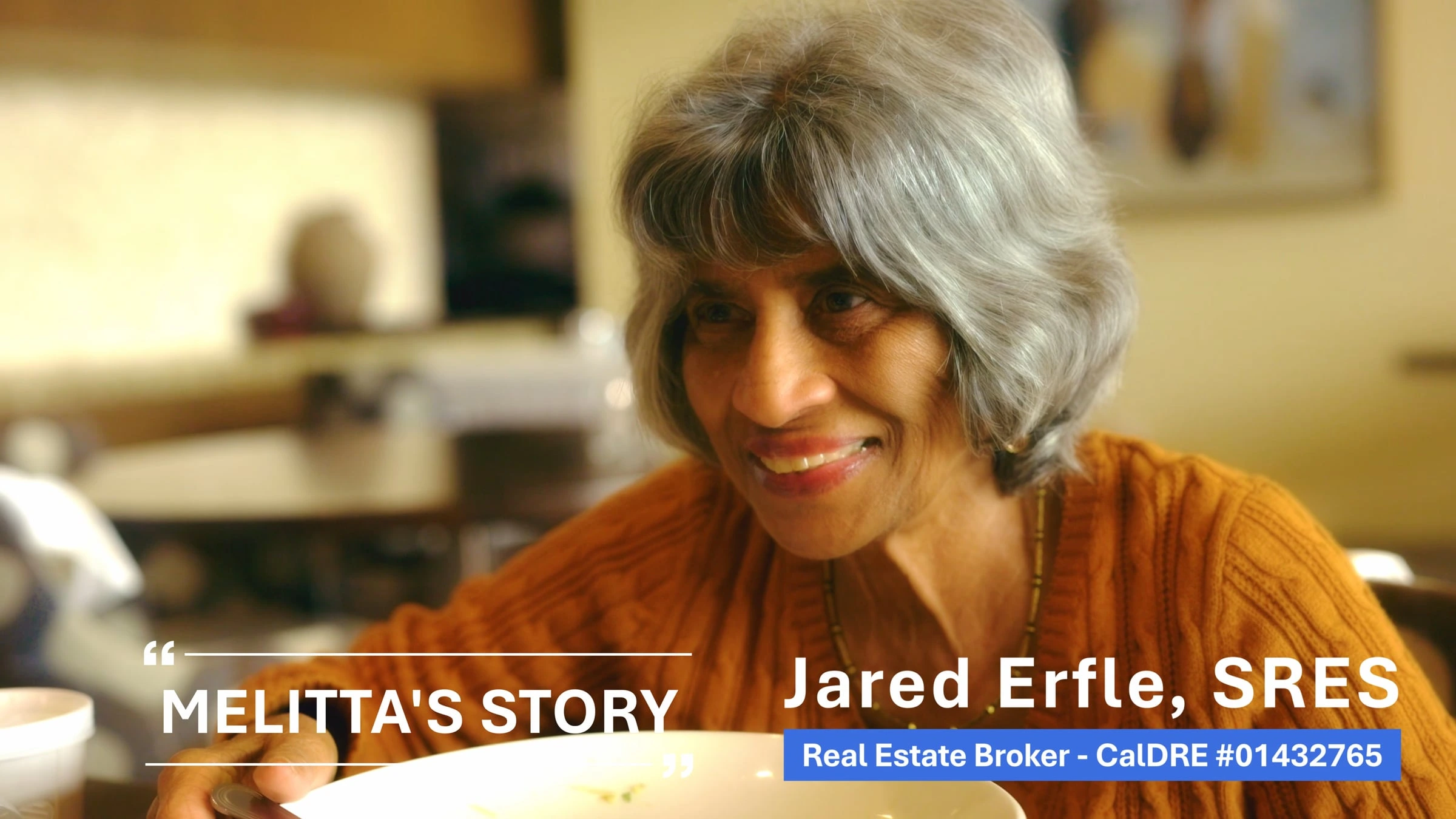
A resident story that shows Melitta her personality, her daily life, her relationship with the community she’s part of provides that reassurance in a way that nothing else in a senior living marketing toolkit can replicate. The viewer isn’t being told that residents are happy. They’re seeing one resident who is, and drawing their own conclusion.
The decision-maker and the subject are different people
This dynamic is one of the things that makes senior living resident stories distinctly different from most testimonial formats. In a typical testimonial, the person on screen is the person who made the purchase decision. In a senior living story, the resident the actual subject of the video didn’t typically choose the community themselves, or chose it under circumstances that involved their family significantly.
That means the video is often serving two audiences at once: the resident’s own relationship to their story and their community, and the adult child who is watching to see whether this looks like a place their parent could thrive. A well-produced resident story honors both of those audiences it respects the resident’s dignity and agency as the subject, while giving the family viewer the evidence they need to trust the community.
This dual audience dynamic shapes how the interview is conducted. The resident is the center of the story, not a prop in a marketing piece. Their voice, their perspective on their own life, their relationship to where they live these are the substance of the video. The community’s role is to have created the conditions for that story to exist.
Why this format requires exceptional care in production
Senior living resident story videos involve subjects who may be navigating cognitive changes, physical limitations, or emotional complexity around the circumstances that brought them to their community. That context requires a production approach that prioritizes the person’s experience over the production’s efficiency in ways that are non-negotiable.
Patience above all else. A resident who takes longer to find words, who circles back to a thought, who needs a moment to collect themselves is not a production problem. They’re the subject of the video, and the crew’s job is to create the conditions where they feel completely unhurried. An interview that’s rushed, even subtly, produces footage that carries the discomfort of the subject and that discomfort transmits to a family viewer immediately.
Dignity in every frame. Framing, lighting, and editorial choices that make a resident look diminished by age or vulnerability undermine the purpose of the video. A production that treats the subject as a full person showing their humor, their opinions, their relationship to life produces something that the family viewer responds to with recognition and hope rather than pity.
Family members as collaborators, not subjects. In some resident stories, family members are part of the narrative adult children describing the decision process, the initial fears, what they’ve observed since. When this element is included, those family interviews need the same care as the resident interview: space to be honest about the difficulty of the decision alongside the relief of having made it well.
Consent and sensitivity around cognitive status. When a resident has cognitive changes that affect their ability to give fully informed consent to being filmed, additional care around the consent process involving family members and community staff is both ethically necessary and practically protective for the community producing the content.
What a senior living resident story communicates that other formats can’t
That residents are seen as individuals. A community that features a specific resident’s specific story her name, her history, what she cares about, how she spends her time is demonstrating through action that it treats people as individuals rather than managing a population. That demonstration is more convincing than any mission statement about person-centered care.
That the transition can be good. One of the deepest fears an adult child brings to this decision is that placing a parent is a loss that the parent’s life contracts, that their world gets smaller, that the move is a diminishment. A resident story that shows a person living with genuine engagement and warmth addresses that fear directly. It reframes the transition as a chapter that can have genuine life in it, not just management of decline.
That the community can be trusted with someone vulnerable. Trust is the entire sale in senior living, and it can’t be manufactured. A resident who speaks warmly and specifically about the people who care for her their names, what they notice, how they respond provides evidence of trustworthiness that no credential or accreditation can replicate.
Where senior living communities use resident story content
Website and digital presence. The community’s website is where most families begin their evaluation, and a resident story video on the homepage or a dedicated resident life page does the trust work that photos and amenity lists can’t.
Virtual tours and online presentations. During periods when in-person tours aren’t available, or for families evaluating from a distance, a resident story video extends the community’s ability to make a human impression beyond a facility walk-through.
Referral and discharge planning conversations. Hospital discharge planners, social workers, and healthcare providers who refer families to senior living communities respond to resident story content because it gives them something specific to share not a brochure, but a real person’s experience that a family can watch and evaluate.
Family events and community communications. Resident stories shared at family events or in community newsletters reinforce to existing families that the community continues to see and value their parents a retention and satisfaction communication as much as a marketing one.
How Realist Films approaches senior living production
The Melitta story reflects a production approach built around one central commitment: the person on screen is the point of the video, not the vehicle for it. That shapes every decision how the interview is conducted, how much time is spent before the camera rolls, how the editing handles moments of pause or reflection, and what the final piece communicates about the community by how it treats its subject.
We work with senior living communities, care facilities, and healthcare organizations on content that handles the emotional complexity of this category with the care it requires and that produces something a family can watch and feel reassured by rather than marketed to.
Have residents whose stories deserve to be told — and families who need to hear them?
Let’s talk about how to approach this kind of production with the care the subject and the audience both deserve.


