
Why Enterprise Companies Use Employee Story Videos — And What Makes Them Work
There’s a moment in most large organization’s communication strategy where the scale of the company becomes the problem. A global energy company employing tens of thousands of people across multiple continents can describe itself in many ways by revenue, by geography, by the breadth of its technology portfolio and none of those descriptions tells a prospective employee, a community stakeholder, or a new hire what it’s actually like to be one of the people who works there.
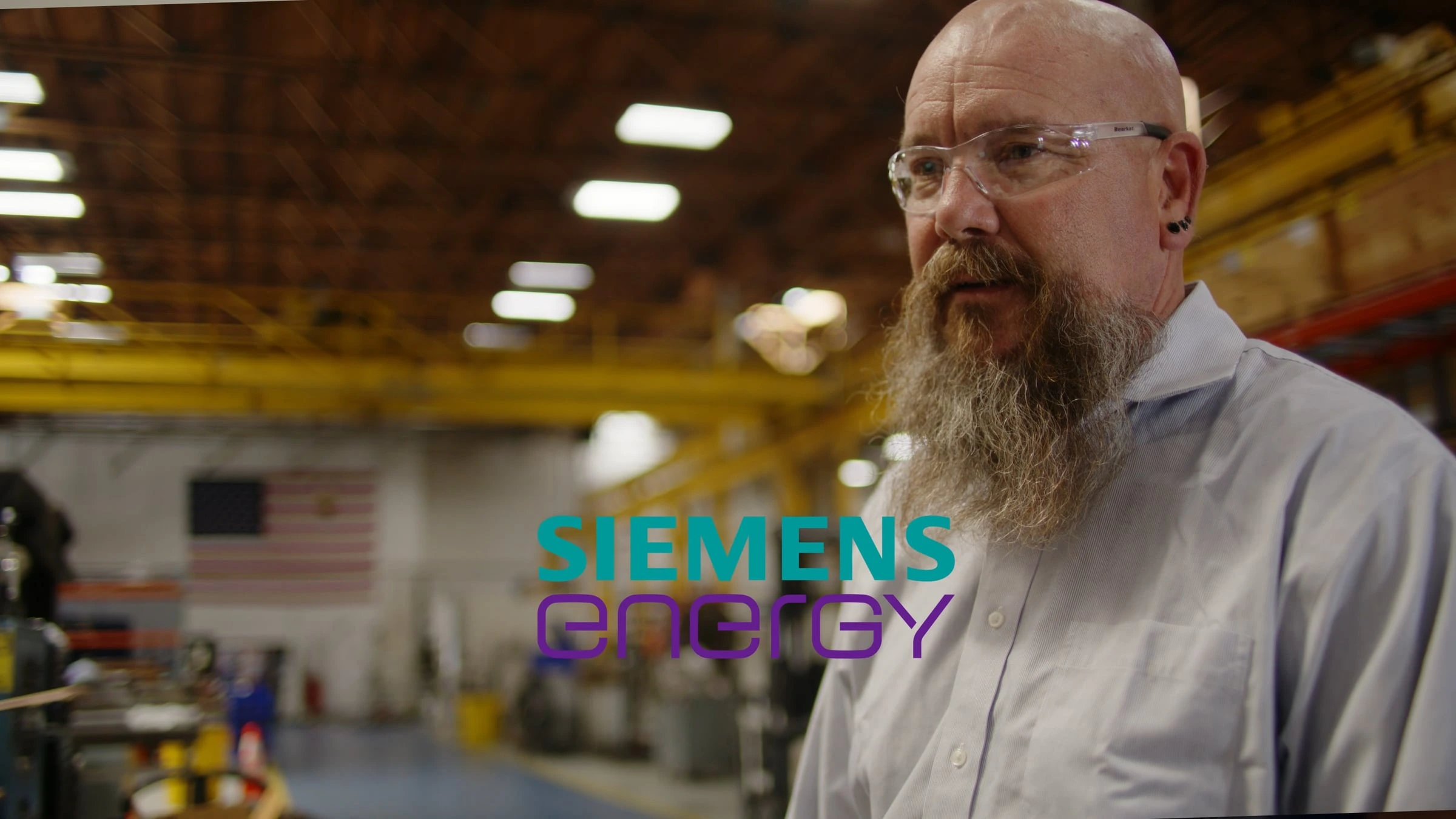
The employee story format exists to solve that problem. Not through an overview of the organization, not through a culture summary that smooths everyone’s experience into a single brand message, but through one person’s specific account of their path, their work, and what the organization has meant to them. Siemens Energy’s “Wil’s Story” is that kind of video and the format works for reasons that are worth understanding clearly before deciding whether to produce it.
What an employee story is and isn’t
It helps to be precise about what this format is doing, because it’s easy to confuse it with adjacent content that has different goals.
An employee story is not a recruitment advertisement. A recruitment ad tells a prospective candidate why they should apply. An employee story shows them, through someone else’s experience, what kind of place they’d be joining and what kind of career might be possible there. The difference is between a pitch and a window.
It’s not a culture overview either. A culture overview describes what the organization values the principles, the mission, the commitments. An employee story shows those values as they’ve actually been lived by a specific person in a specific role over a specific period of time. One is assertion; the other is evidence.
And it’s not a testimonial in the traditional marketing sense, because the audience isn’t being asked to buy something. The audience whether a prospective employee, a community member, a policy stakeholder, or an internal employee is being invited to understand the human reality of a large organization through a single person’s experience of it.
Why the individual story works better than the collective one
Large organizations frequently make the mistake of trying to communicate their culture through aggregation showing many people across many roles in many locations, building an impression of scale and diversity through sheer accumulation of faces and testimonials. The result is often a video that communicates breadth without communicating anything specific, and that leaves the viewer with a general positive impression that dissipates almost immediately.
An individual story works differently because it’s specific enough to be memorable. Wil’s path, Wil’s challenges, Wil’s relationship to the work these details are particular enough to stay with a viewer in a way that a montage of happy employees simply isn’t. The paradox of scale is that showing one person’s story clearly is often more effective at communicating organizational culture than showing a hundred people’s stories briefly.
This is especially true when the individual story touches on something that matters beyond the individual a background that’s non-traditional for the industry, a challenge that was navigated with the organization’s support, a moment where the company’s stated values were tested against a real situation and held. These are the elements that turn a personal story into organizational evidence.
The employer branding function at enterprise scale
For a company the size of Siemens Energy, employer branding is a significant strategic function. Competing globally for engineering, scientific, and technical talent against other major industrial and technology companies means that the impression Siemens Energy makes as an employer its reputation for career development, for cultural inclusivity, for meaningful work directly affects its ability to hire the people it needs to execute its strategy.
Employee story videos serve this function in a way that’s difficult to replicate through other formats. They give prospective employees a recognizable human experience to evaluate rather than an abstracted brand promise. They demonstrate, rather than assert, that the organization’s commitment to its people is real. And they reach the specific audiences a company most wants to attract often younger engineers and scientists who are evaluating multiple employers and weighing cultural fit alongside compensation and career opportunity.
The distribution of this content matters as much as the production. LinkedIn, YouTube, and the careers sections of major company websites are where these videos circulate to the relevant audience. An employee story that performs well in those channels that gets shared by existing employees because it represents their experience accurately, that gets watched by candidates because it shows them something they actually want to know is doing employer branding work that paid advertising can’t replicate.
What makes an employee story compelling rather than promotional
The failure mode of employee story video is well-established in the genre: a carefully managed narrative that sounds like it was approved by four layers of communications and legal review before the employee was allowed to say it. Candidates who watch this content can detect it immediately, and it produces the opposite of the intended effect confirming that the organization’s communication is carefully controlled rather than genuinely open.
The content that works has specific characteristics:
It includes something real about difficulty. A career narrative that describes nothing but smooth progression and institutional support reads as constructed. One that acknowledges a challenge a moment of uncertainty, an obstacle that required support, a transition that wasn’t seamless — and describes how the organization responded reads as honest. That honesty is what makes the positive parts of the story credible.
The employee’s voice sounds like them. This requires an interview approach that lets people speak naturally rather than rehearse approved talking points. The language should be their own specific to how they actually talk about their work, unsmoothed into corporate register. An editor who preserves this rather than cleaning it into uniformity is doing the format correctly.
The production serves the person, not the brand. Visually and editorially, an employee story should feel like it’s about Wil the environment where he works, the people he works with, the texture of his daily professional life rather than like a brand video that happens to feature an employee. When the brand elements are subtle and the person is foregrounded, the content reads as genuine. When it’s the other way around, it reads as a commercial wearing a human face.
The internal audience for employee stories
External recruiting is the most obvious use case, but employee story content also serves internal purposes that enterprise organizations sometimes overlook.
For new employees joining a large organization, content that shows real people’s career paths within the company provides orientation and aspiration in a way that an onboarding handbook doesn’t. For existing employees considering whether to stay or grow within the organization, seeing colleagues’ stories of career development at the company is a retention communication as much as a recruiting one. For leadership communicating organizational values during periods of change, employee stories that demonstrate those values through lived experience are more credible than executive statements about them.
A video like Wil’s Story that’s produced for external employer branding often has an internal shelf life that extends the production investment considerably.
How Realist Films approaches employee story production for enterprise clients
We’ve produced employee and individual story content for enterprise organizations including Siemens Energy and the Serra Center’s client impact stories across a range of purposes and audiences. The approach is consistent regardless of the organization’s size: find the authentic version of the story, create the conditions for the person on screen to tell it genuinely, and edit with the restraint to let that genuine version stand without smoothing it into something more comfortable but less true.
For large organizations managing multiple approvals and communications guidelines, we build the review process into the timeline from the start rather than treating it as a post-production surprise which protects both the production schedule and the authenticity of the final content.
Have employees whose stories would tell your organization’s culture more honestly than any overview video could?
Let’s talk about which stories are worth capturing and how to capture them in a way that holds up.


