
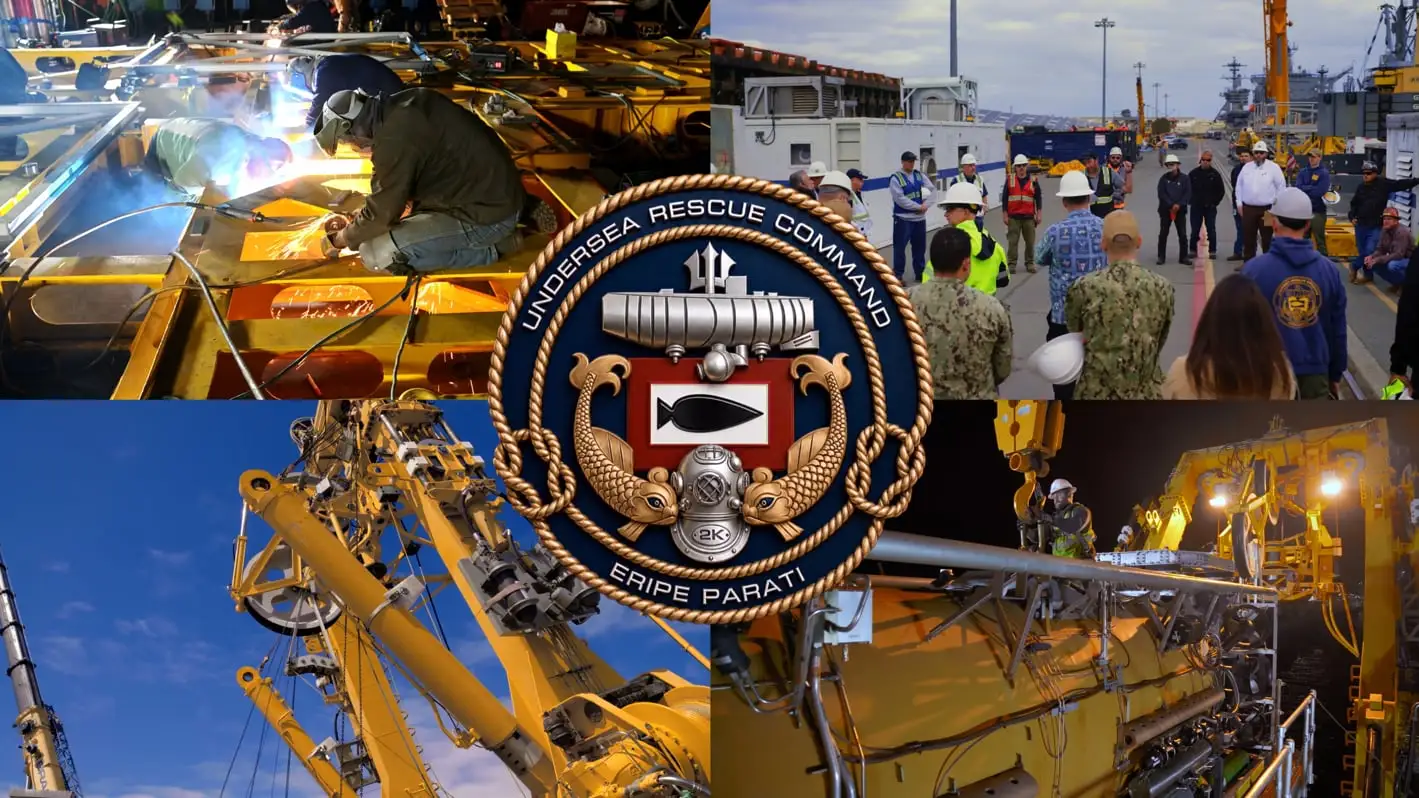
Video Documentation for Military and Defense Operations: What It Takes to Get It Right
Most video production work happens in environments that are designed, at least partially, for human comfort and visual presentation. Offices, studios, conference rooms, clinical settings, spaces where a crew can set up, adjust, and work with reasonable predictability. Military and defense documentation is different in almost every respect. The environment isn’t designed for cameras. The schedule is driven by operational requirements, not production convenience. The subject matter has technical and procedural specificity that requires the production team to understand what they’re capturing, not just how to capture it.
In the realm of Video Documentation for Military and Defense Operations, understanding the nuances of the environment is crucial.
The time-lapse documentation Realist Films produced for the United States Submarine Rescue Command, capturing the timed mobilization of the Submarine Rescue Diving and Recompression System, sits at the far end of that spectrum, a highly specialized piece of operational documentation that required a production approach calibrated to the subject rather than the other way around.
What time-lapse documentation does for complex operational procedures
A mobilization sequence, the process of preparing, loading, and deploying a sophisticated system like the SRDRS, unfolds over a timeline that’s meaningful to document but too extended to communicate through conventional video at real speed. The SRDRS is a multi-component submarine rescue system; its mobilization involves coordinated movement of equipment, personnel, and logistics across a period that would be unwieldy to present in real time.
The Video Documentation for Military and Defense Operations process requires careful planning to ensure that every crucial moment is captured effectively.
Time-lapse compression solves that communication problem. By collapsing hours of operational activity into minutes of footage, a time-lapse document communicates the full arc and complexity of a mobilization sequence in a format that’s both watchable and genuinely informative, showing the coordination, the sequence of steps, and the scale of the operation in a way that neither a written procedure document nor conventional video could replicate as effectively.
This is especially true in Video Documentation for Military and Defense Operations where the stakes are high.
For military and defense applications, this kind of documentation serves several distinct purposes simultaneously: operational record-keeping, training reference, procedural verification, and institutional knowledge preservation. A time-lapse of a timed mobilization is both evidence that the procedure was executed and a reference for how it should be executed in the future.
Moreover, effective Video Documentation for Military and Defense Operations can aid in training future personnel.
What makes defense and military documentation different from commercial production
Access and clearance. Working in a military environment requires coordination with public affairs offices, adherence to operational security requirements, and often advance approval of the content before it can be used or distributed. A production company that hasn’t navigated this process before will discover its complexity during the shoot rather than in pre-production, which creates problems for both the crew and the client.
Operational primacy. In a commercial shoot, the production schedule is usually the primary organizing constraint. In a military operational environment, the operation itself comes first and the production adapts around it. A crew that expects the environment to accommodate them rather than the reverse is a liability in this context.
Technical subject matter literacy. Documenting a submarine rescue system mobilization requires enough understanding of what’s being captured to make meaningful decisions about what to show and in what sequence. A crew that treats the footage as a generic sequence of people moving equipment will produce something technically competent but operationally uninformative. Understanding the significance of what’s happening, which steps matter, which transitions are critical, what the coordination between personnel and equipment actually represents — is what produces documentation that serves its purpose.
With Video Documentation for Military and Defense Operations, understanding technical details is paramount.
Environmental unpredictability. Military and maritime operational environments are subject to conditions that commercial shoots rarely face — weather, light, space constraints, equipment and personnel movement that the production has no authority to pause or redirect. A crew that can work effectively within those constraints rather than around them is built differently from one whose experience is primarily studio or controlled-location work.
For example, Video Documentation for Military and Defense Operations often faces unpredictable challenges.
Equipment resilience. Maritime and operational environments are demanding on camera equipment in ways that studio and office shoots aren’t. Saltwater proximity, temperature variation, vibration, and the physical constraints of working around large operational equipment all require production gear selected and managed for durability rather than just image quality.
Time-lapse as a specific production discipline
There is a distinct discipline to Video Documentation for Military and Defense Operations that sets it apart from other filming techniques.
Time-lapse photography is often treated as a post-production technique, speed up the footage and the job is done. Professional time-lapse for documentation purposes is more deliberate than that.
The interval between frames is a calculated decision based on the duration of the operation being documented and the desired playback length. Too short an interval and the compression doesn’t achieve its purpose; too long and individual steps become invisible. For an operationally meaningful time-lapse of a complex mobilization, this calculation happens before the shoot, not after.
Camera placement and stability matter more in time-lapse than in conventional video, because any variation in position between frames becomes visible as a jitter or jump in the finished footage. In an active operational environment where equipment and personnel are moving continuously around the camera position, achieving that stability requires specific rigging decisions and constant attention to anything that might disturb the setup.
Coverage planning is also more consequential. Unlike conventional video where missed moments can sometimes be captured in a subsequent take, a time-lapse of a timed mobilization is a one-pass document. The setup decisions made before the sequence begins determine what’s captured and what isn’t.
Why specialized production work requires specialized production experience
Because Video Documentation for Military and Defense Operations doesn’t fit traditional categories, expertise is crucial.
The USRC SRDRS documentation is an example of the kind of work that doesn’t fit neatly into the standard categories of commercial video production, it’s not a corporate film, not a marketing piece, not an event video. It’s specialized operational documentation that requires a production partner who understands both the technical demands of the format and the operational context of the environment.
The experience required for Video Documentation for Military and Defense Operations is not commonplace in typical production companies.
That combination, technical production capability and genuine familiarity with demanding, non-standard environments, is rarer than generalist commercial production experience. Most production companies are built for the mainstream of corporate and marketing video. The crews that can work effectively in military, maritime, industrial, and operational environments are a smaller subset, and the quality difference shows up in both the process and the product.
As such, Video Documentation for Military and Defense Operations showcases a unique blend of skills and understanding.
Realist Films: production for specialized and demanding environments
Realist Films has produced documentation and operational video for defense, maritime, and industrial clients alongside our work in corporate, marketing, and commercial video. The approach to these projects is the same as our approach to any specialized environment: understand the context well enough to make production decisions that serve the client’s actual purpose, work within the operational constraints rather than against them, and produce something that does its job long after the shoot day is over.
Realist Films excels in Video Documentation for Military and Defense Operations by emphasizing context-driven decisions.
Working on a documentation, training, or operational video project that requires production experience beyond standard commercial work?
Let’s talk about what the project involves and whether our experience is the right fit.


