
The Value of an Ongoing Production Relationship for Military and Defense Organizations
Most production relationships are transactional. A client needs a video, they hire a production company, the video gets made, and everyone moves on. That model works for a lot of projects. But for organizations with ongoing operational programs, recurring training exercises, and long-term institutional communication needs, a different model produces considerably more value, one where the production partner understands the organization well enough to add something beyond technical execution.
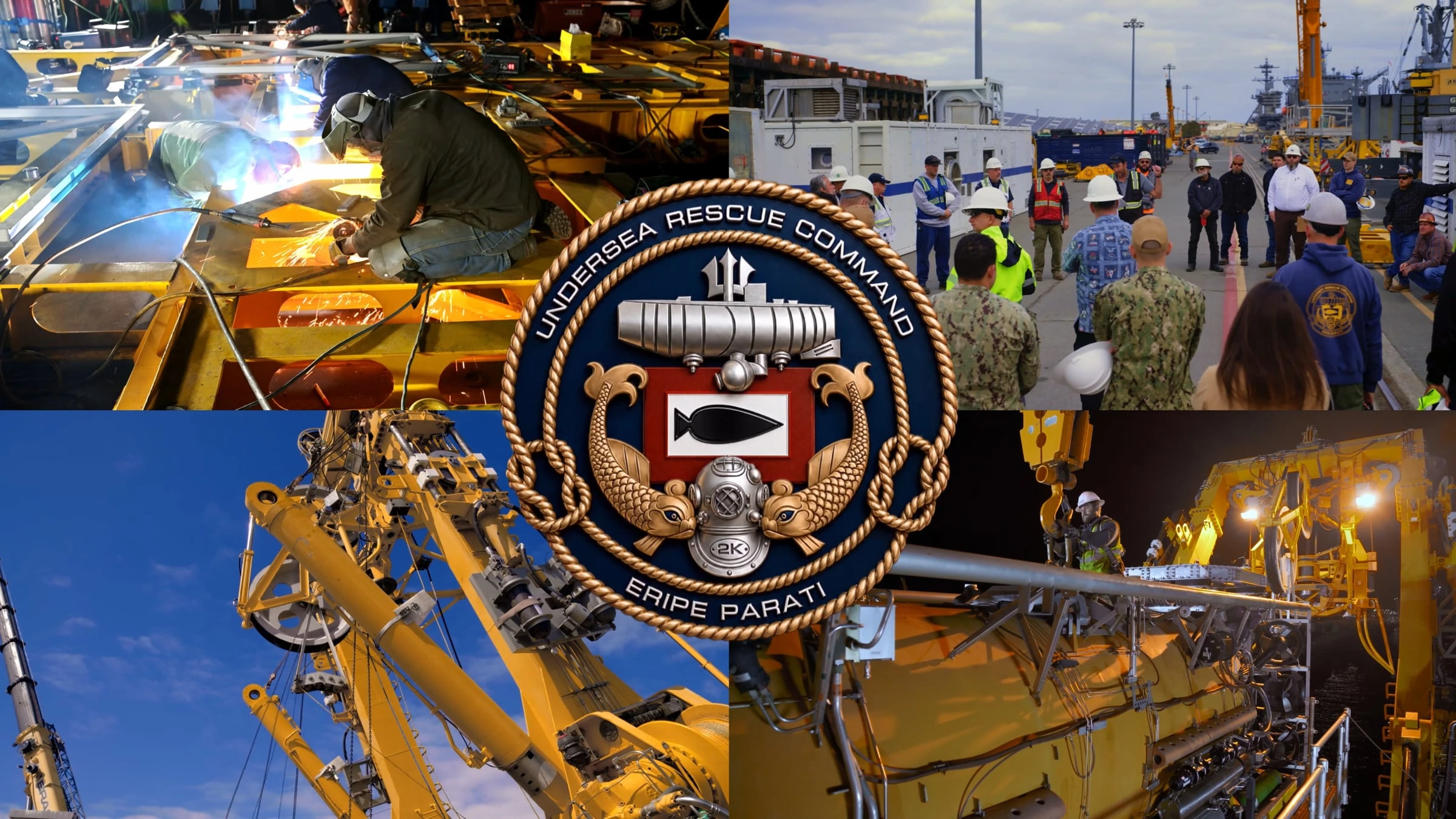
The Undersea Rescue Command relationship is an example of what that looks like in practice. Realist Films has now documented multiple SRDRS mobilization exercises across different years, producing timelapse documentation, promotional cuts, and command interviews that collectively form something more than a set of individual videos: an evolving record of the program’s capability, growth, and readiness over time.
What accumulates over multiple productions
The first time a production crew documents a complex military operation, most of their energy goes into understanding the environment, the safety protocols, the operational sequence, the key moments that matter, the people whose roles are central to the story. That learning has a real cost in time and coordination.
By the second or third engagement, that learning has already happened. The crew arrives knowing what the SRDRS mobilization looks like, understanding which phases are operationally significant, familiar with the personnel and the environment. Setup is faster. Coordination is smoother. The footage is better because the crew is spending their attention on capturing the operation rather than orienting themselves to it.
That accumulated knowledge is worth something that doesn’t appear on an invoice but shows up clearly in the quality and efficiency of the production.
What a multi-year documentation library provides
A single timelapse of a timed mobilization proves it happened. A library of timed mobilizations across multiple years proves something considerably more significant: that the capability is consistent, repeatable, and improving over time.
For an organization like the Undersea Rescue Command, whose mission is submarine rescue and whose effectiveness depends on readiness, demonstrating consistent performance across multiple exercises is operationally meaningful, not just archivally interesting. Congressional stakeholders evaluating program funding, Navy leadership assessing readiness, and coalition partners relying on the US submarine rescue capability all benefit from evidence that the performance documented in one year holds across subsequent years.
A growing library of production across multiple exercises provides that evidence in a format that’s far more compelling than a written report describing the same performance.
The 21-minute documentation standard
The 2026 SRDRS mobilization timelapse runs 21 minutes, the longest version in the documentation series. That duration reflects a deliberate decision about what this particular version needs to accomplish.
At 21 minutes, the timelapse captures the complete mobilization sequence at a level of detail that allows a technically informed viewer to follow every significant phase of the operation, understand the sequencing of steps, and observe the coordination between personnel and equipment across the full duration. This is documentation at the level of operational review, useful not just for external stakeholders but for the command itself in assessing and improving its own procedures.
The coexistence of this 21-minute version with shorter promotional and timed edits from the same program illustrates a principle that applies across many documentation contexts: the right length for a video is determined by what the specific audience needs from it. External communications benefit from compression. Operational review benefits from completeness. The same underlying footage, edited appropriately for each purpose, serves both.
How ongoing relationships develop production efficiency
Beyond the footage quality benefits, a long-term production relationship with an organization like the USRC creates operational efficiencies that compound over time.
Clearance and coordination processes that required significant lead time on the first engagement become familiar and streamlined. Communications with public affairs offices, safety officers, and operational coordinators build on established trust rather than starting from scratch. Equipment and technical choices that proved effective in previous productions get refined and improved for subsequent ones.
The result is that each successive production costs less in coordination overhead than the one before it, while delivering footage that’s more informed and contextually richer. For an ongoing program with recurring documentation needs, that efficiency is a meaningful part of the value a long-term partner provides.
Why this model fits certain organizations specifically
Not every organization benefits from an ongoing production relationship. A company producing a one-time brand film, a nonprofit capturing a single impact story, a business launching a product, for these clients, a project-based relationship is the appropriate model.
The organizations that benefit most from ongoing production relationships tend to share a few characteristics: they have recurring events or exercises that warrant documentation, their communication needs evolve over time in ways that benefit from institutional knowledge about the organization, and the value of a consistent visual record grows meaningfully over years rather than being fully captured in a single production.
Military and defense organizations with ongoing operational programs fit this profile clearly. So do public agencies with long-running infrastructure projects, scientific organizations conducting multi-year research, educational institutions building a cumulative record of their programs, and corporations with ongoing investor or stakeholder communication needs.
What Realist Films brings to long-term defense production relationships
The USRC documentation series represents a production relationship built over multiple years and multiple exercises. We understand the SRDRS program, the operational environment at the facility, the coordination requirements of filming in a naval context, and the different purposes the footage needs to serve across external communications, operational review, and institutional documentation.
That accumulated understanding is what allows us to arrive at a 2026 mobilization and produce a 21-minute timelapse that serves operational review purposes while also yielding the shorter promotional and timed edit versions that serve different audiences, without needing to rebuild that contextual knowledge from scratch each time.
For military, government, and other organizations with ongoing documentation needs, that’s the model worth considering: not a series of one-off productions, but a production partnership that builds in value over time rather than starting from zero with each new project.
Have an ongoing operational program, recurring event series, or long-term institutional communication need that would benefit from a consistent production partner?
Let’s talk about what that kind of relationship looks like and what it builds over time.


