
Long-Form Time-Lapse: When the Full Mobilization Needs to Be Seen From Start to Finish
The instinct in most video production is toward brevity. Cut it shorter. Get to the point faster. Respect the viewer’s time. That instinct is usually correct but not always, and understanding when it isn’t is part of what separates a production partner who thinks about the purpose of a deliverable from one who applies the same editorial philosophy to every project regardless of context.
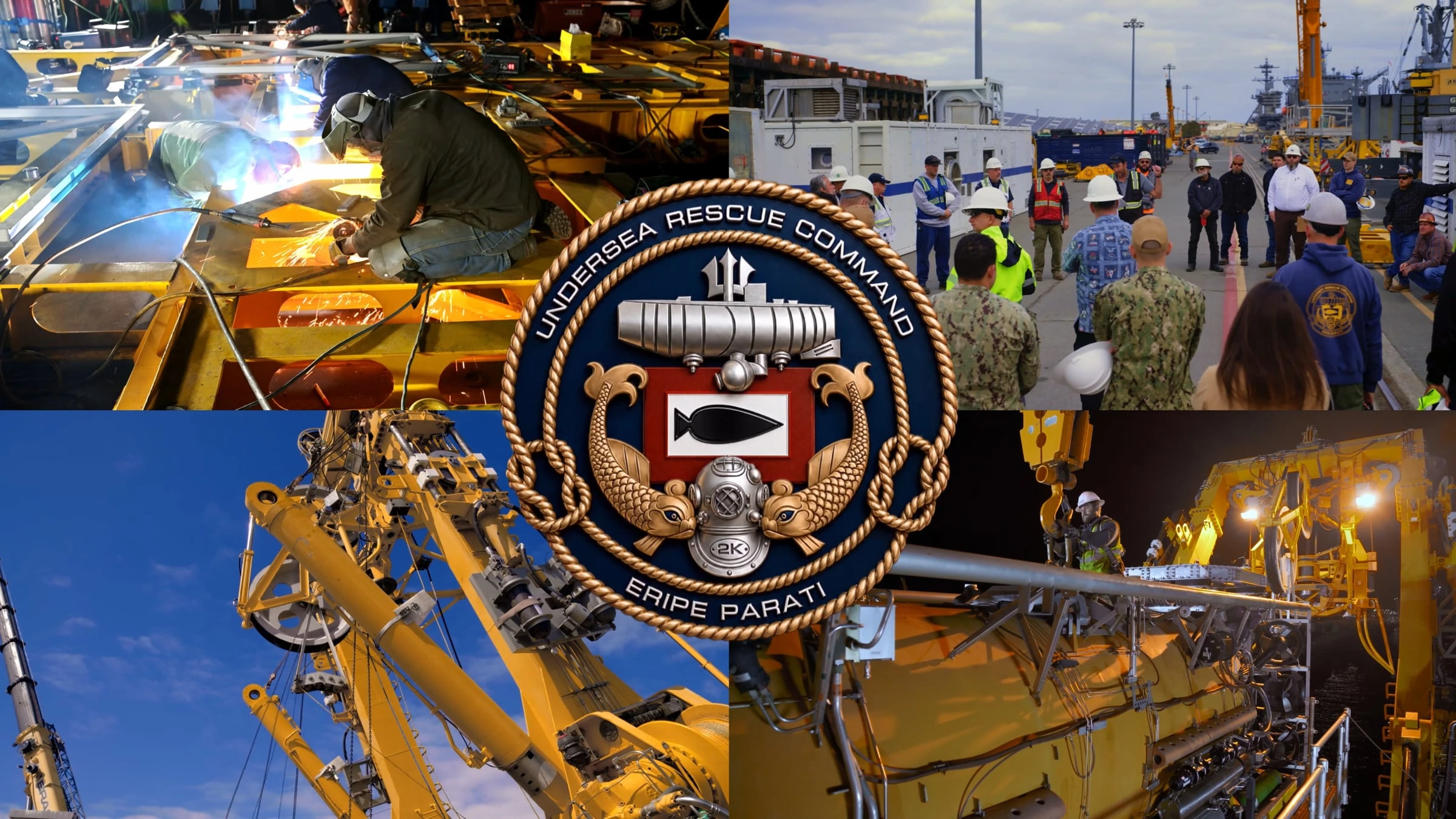
The Undersea Rescue Command SRDRS Timed Mobilization Full Timelapse runs six minutes. That’s longer than most marketing content anyone would produce. It’s also exactly as long as it needs to be because the thing it’s documenting, a complete submarine rescue system mobilization from start to finish, requires six minutes to show in full. Cutting it shorter would produce something that looks more digestible and documents less.
What a long-form time-lapse accomplishes that a short edit doesn’t
The shorter timed edit of the same mobilization serves a specific purpose: demonstrating that the sequence happened and can be completed within a target window. It’s evidence of a timed performance compressed to make that evidence fast and clear.
The six-minute full timelapse serves a different purpose: showing the complete mobilization sequence in enough detail that a viewer can follow the logic of the operation from beginning to end. Every major phase is visible. The coordination between personnel and equipment at each stage can be observed. The scale of the operation accumulates gradually rather than being implied through a compressed highlight.
For the audiences who need to understand what a SRDRS mobilization actually involves training personnel, operational planners, command staff reviewing procedure documentation, oversight bodies assessing readiness the full version provides something the short version can’t: a complete operational record that can be studied rather than simply watched.
The documentary function of long-form operational video
There’s a category of video content that exists primarily as a document rather than as communication content whose primary job is to create a reliable record of something that happened, in enough detail to be useful as reference material over time.
Military and defense operational documentation sits firmly in this category. A submarine rescue system mobilization is a complex, multi-phase operation that involves significant coordination of specialized equipment and trained personnel. Documenting it fully in a format that preserves the sequence, the timing, and the visual relationship between different phases of the operation creates institutional knowledge that has value long after the specific mobilization it records.
Time-lapse is particularly well-suited to this function for operations that unfold over extended periods. The compression makes an hours-long sequence watchable without losing the sequential integrity that makes the document useful. A viewer can watch the full mobilization proceed from initial setup through final readiness in six minutes, maintaining an understanding of how each phase connects to the next which a highlights edit or a written procedure document alone can’t provide.
When full-length is the right answer
The decision between a short edit and a full-length version is a deliverable purpose question, not an aesthetic one. A few contexts where long-form is the right answer:
Training and procedure reference. Personnel who need to understand the full sequence of an operation benefit from being able to watch it from beginning to end, at a pace that allows each phase to register. A document used for training purposes needs completeness more than it needs engagement optimization.
Oversight and accountability documentation. Demonstrating to command or oversight bodies that a complex operation was completed correctly, in sequence, requires a record that shows the full operation rather than selected highlights. A six-minute complete record is more useful in this context than a two-minute representative sample.
Institutional knowledge preservation. Operational procedures evolve. Personnel rotate. Equipment changes. A complete video record of a mobilization as it was conducted at a specific point in time preserves knowledge that might otherwise exist only in the memories of people who were present memories that are imperfect and unavailable when those personnel are no longer in the role.
Technical and procedural review. When operational procedures are being reviewed or updated, a complete video record provides a baseline reference that a written procedure document doesn’t. The video shows what was actually done, which sometimes differs from what the procedure specified and identifying those gaps is part of what makes operational review useful.
The production discipline that makes long-form time-lapse work
A six-minute time-lapse of a complex operation isn’t simply more footage of the same things a shorter edit would show. It requires specific production decisions that a highlight edit doesn’t.
Coverage planning for completeness. A highlight edit can be assembled from the most visually interesting moments of a longer capture. A full-length operational document needs coverage of every significant phase, including transitional moments that might not be visually dramatic but are operationally significant. The shot list for a complete operational record is more demanding than for a highlights package from the same event.
Interval calibration for a six-minute target. The time-lapse interval how frequently a frame is captured determines the relationship between real elapsed time and compressed viewing time. A six-minute timelapse of a multi-hour operation requires a specific interval calculation, and that calculation needs to happen before the shoot begins because it can’t be adjusted in post without introducing artifacts.
Consistent camera position across a long capture. A time-lapse shot requires a stationary camera for the duration of the capture any movement between frames produces visible jitter in the final footage. For a multi-hour operational sequence, maintaining that stability across the full duration, in a dynamic environment where personnel and equipment are continuously moving around the camera position, requires specific rigging and monitoring throughout.
How the short edit and the long form serve different audiences
The SRDRS production ultimately produced both versions the timed short edit and the six-minute full timelapse because both serve real purposes for real audiences. The short edit demonstrates timed performance. The full timelapse documents the complete operational sequence.
This is a version strategy applied to a highly specialized context. The same production investment yields two deliverables, each built for a different use and a different viewer which is the same principle that applies to a SaaS case study producing a LinkedIn cut and a sales deck version, or a nonprofit impact story producing a gala reel and a grant application piece.
The difference in context couldn’t be more stark. The principle is identical.
How Realist Films approaches long-form operational documentation
We plan the full deliverable set including whether a project warrants both a short and a long-form version before any camera goes on location. For specialized documentation work like the USRC SRDRS timelapse, that planning conversation determines the interval, the coverage requirements, and the production approach that serves the complete deliverable set rather than optimizing for a single format.
Have an operational or procedural sequence that needs to be documented completely, not just highlighted?
Let’s talk about what a full-length documentation approach would require for your specific context.


