
How Powersports and Outdoor Brands Use Lifestyle Video to Sell More Than a Product
There’s a version of a powersports product video that lists horsepower, payload capacity, turning radius, and battery range in a voiceover while footage of the vehicle plays underneath. That video exists, it serves a purpose, and it’s almost never what actually sells the vehicle.
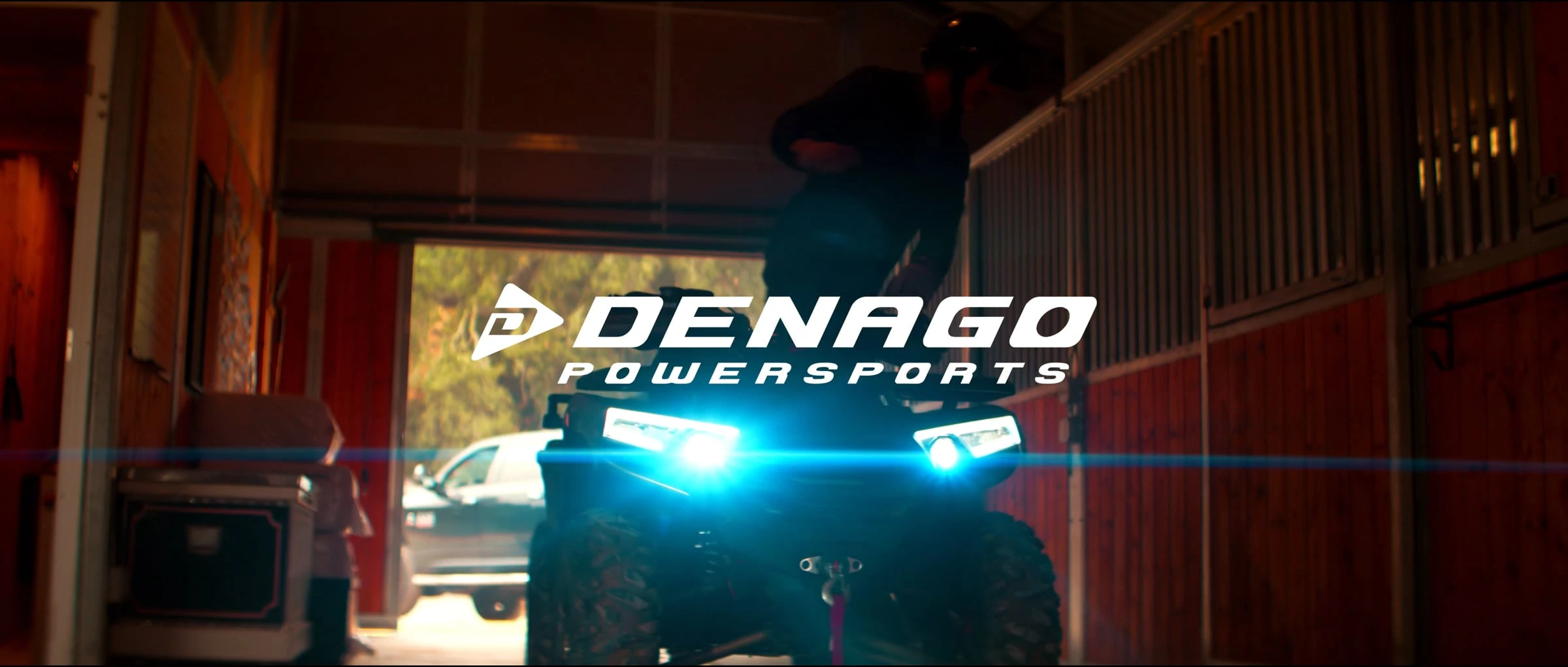
What sells it is something closer to what Realist Films produced for Denago’s Freelander footage that puts the UTV in the actual context where it will be used, doing the actual work it’s designed for, in a way that makes the viewer recognize their own life in what they’re watching. Not “here’s what this vehicle can do” but “here’s who this vehicle is for, and if that’s you, you already know you need one.”
That’s the difference between a product demonstration and a lifestyle film, and it’s a meaningful distinction for brands in the powersports and outdoor industry.
Why lifestyle framing outperforms spec-driven content for this category
Powersports buyers, whether they’re ranchers, outdoor enthusiasts, farm operators, or recreational users, are making a purchase that’s connected to a specific version of how they live and work. The vehicle is part of an identity, not just a tool. That’s why spec comparisons, while necessary somewhere in the purchase process, aren’t what moves people from interest to commitment.
What moves them is recognition. Seeing their landscape in the footage. Seeing the kind of work they do represented on screen. Feeling that the brand understands not just what they need the vehicle to do but who they are and what they care about. A lifestyle film that achieves that recognition is doing something a specification sheet can’t.
For an electric UTV brand like Denago entering a market dominated by established gas-powered competitors, the lifestyle framing matters even more. The case for an electric powersports vehicle isn’t primarily about horsepower numbers, it’s about a different relationship with the land, a different kind of working experience, and a set of values around sustainability and quiet operation that appeal to a specific buyer. Those values don’t come through in a spec list. They come through in how the vehicle is shown working in a specific environment with specific people.
What a ranch life setting communicates that a test track can’t
Location is one of the most significant creative decisions in lifestyle product video, and the choice of a working ranch for the Denago Freelander shoot is deliberate.
A test track demonstrates capability in controlled conditions. A ranch demonstrates capability in real ones, uneven terrain, actual work tasks, genuine environmental conditions. The viewer watching ranch life footage isn’t watching a simulation. They’re watching something that looks like their own land, their own operation, their own daily reality.
That authenticity of setting does two things simultaneously. It validates the vehicle’s practical performance claims in a way that’s more convincing than manufacturer-stated specs. And it connects the brand to a specific lifestyle identity, working the land, managing a ranch, living rurally, in a way that makes the purchase feel like a statement about who the buyer is, not just a transaction.
The production decisions that make lifestyle video work
Talent and casting. The people on screen in a lifestyle film carry the lifestyle positioning. Casting someone who looks like they’ve never worked a ranch in their life undermines everything the setting is trying to communicate. The right talent for this format isn’t necessarily a professional actor, it’s often someone whose relationship to the environment and the vehicle reads as natural because it is. Real operators, real landowners, or talent selected specifically for their authenticity in the context being depicted.
Natural light over controlled light. Lifestyle video in outdoor environments almost always benefits from working with natural light rather than against it, choosing the right times of day, waiting for the right conditions, letting the landscape provide the visual context rather than imposing artificial lighting that makes the footage feel produced rather than found. This requires more patience in production and more flexibility in scheduling, but the results are visible in the footage.
The vehicle as part of the environment, not the center of attention. A common mistake in product lifestyle video is treating the product like the subject of every shot, always centered, always prominent, always the focal point. The more effective approach often puts the vehicle in context alongside everything else in the environment, so that it reads as a natural part of the landscape rather than an object being shown off. The product earns its centrality when it’s the thing that makes the work possible, not when it’s the thing the camera is always pointing at.
Sound design that reflects the lifestyle. For an electric UTV specifically, sound is part of the story. The relative quiet of electric operation on a working ranch, compared to the engine noise of a gas-powered alternative, is an experiential difference that matters to a specific buyer. Footage that captures the ambient sounds of the ranch environment, with the subtle hum of the electric drivetrain rather than a combustion engine, communicates that difference without stating it.
How this content reaches the right buyer
Powersports and outdoor lifestyle content circulates through specific channels where the target buyer already spends time, YouTube channels covering outdoor and agricultural topics, Instagram accounts following ranch and farm life, Facebook communities organized around specific land uses or vehicle categories. Content that reads as native to those communities, rather than as advertising dropped into them, performs significantly better.
A lifestyle film for a ranch-use UTV that looks and feels like the kind of content a rancher would share with someone asking about their equipment is reaching exactly the right audience in exactly the right frame of mind. The goal isn’t to interrupt their content consumption with an ad, it’s to be the content they’re already looking for.
The longer-form and short-form balance
The Denago Freelander Ranch Life film is produced as a full-length piece, which serves certain distribution contexts, a website landing page, a YouTube channel, a dealer presentation. The same footage, edited differently, produces short-form social content that serves different contexts. A production that’s planned from the start to yield both, the full lifestyle film and a set of shorter social cuts from the same shoot day, extends the value of a single production investment across multiple distribution needs without requiring a second shoot.
How Realist Films approaches lifestyle product video
We’ve produced lifestyle and product content for powersports brands, outdoor equipment companies, automotive clients, and related categories where the purchase decision is connected to identity and lifestyle as much as to technical specifications. The approach is consistent: understand who the buyer is and what their life actually looks like, build the production around that reality rather than around a controlled demonstration environment, and edit with enough restraint that the product earns its place in the frame rather than dominating it.
Selling a product that belongs to a specific lifestyle, and looking for content that speaks to that buyer in their own language?
Let’s talk about where and how they actually live, and build the production around that.


